



















































Skip to content
Illustration for the article “Campaign optimization best practices”

Campaign optimization best practices

Campaign optimization determines how effectively marketing campaigns achieve their goals and use resources. Done correctly, it can improve performance, reduce costs, and increase conversions.

Feb 12, 2026

This guide explores how to implement a structured optimization framework, identify high-impact metrics, and apply scaling techniques to maintain long-term campaign efficiency.

What is campaign optimization?

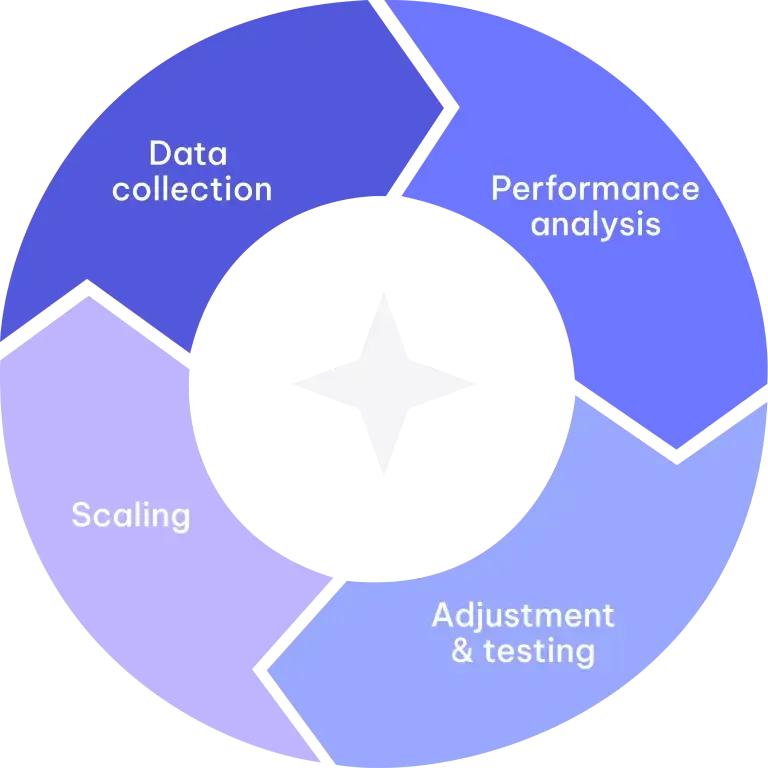
Campaign optimization is the process of adjusting and improving marketing efforts to achieve better results using the same resources.

Campaign optimization cycle: data collection, performance analysis, adjustment & testing, and scaling

It usually involves analyzing performance data, aligning targeting, creative, and budget, as well as testing different approaches. Since campaign optimization focuses primarily on what works best, it helps cut unnecessary costs, improve audience engagement, and boost return on investment.

Audience segmentation and targeting

Turning audience differences into insights

Segmenting the audience is a crucial part of campaign optimization, as it helps deliver relevant messaging to the right people. It involves dividing users into groups based on demographics, interests, behavior, or location.

To target campaigns precisely, marketers need to consider patterns in user engagement, preferences, and past interactions, for each segment to reflect differences that influence campaign performance. In such a way, campaigns can productively respond to specific audience behaviors.

Optimization framework overview

A clear framework structures campaign optimization, breaking it into stages that make the process manageable and easier to follow. Below, the main stages in a typical optimization framework are outlined.

  1. 01

    Setting goals

    First, it is important to define what the campaign aims to achieve, for instance, awareness, traffic, leads, or sales. Clear goals provide direction for subsequent optimization steps.

  2. 02

    Selecting key metrics

    Performance is measured through relevant KPIs such as CPA, ROAS, CTR, or conversion rate. These metrics show how well the campaign aligns with its objectives.

  3. 03

    Collecting and analyzing data

    To understand which elements drive results and which require adjustment, performance data from the campaign is gathered and analyzed thoroughly.

  4. 04

    Testing and iteration

    Experiments with different approaches, such as variations in creatives, audiences, or placements, help reveal which combinations perform best. Insights from these tests guide ongoing refinements.

  5. 05

    Scaling effective strategies

    Once a strategy proves successful, it can be gradually scaled. This involves expanding the campaign’s reach, increasing the budget carefully, and exploring new channels or audience segments.

Measuring results with core metrics

To understand what works and where adjustments are needed, evaluating campaign performance is essential. Tracking the right metrics helps measure actual results against objectives. The following metrics provide a clear view of campaign performance:

  • CPA (cost per action) — Measures how much each desired action, like a click or lead, costs.
  • ROAS (return on ad spend) — Shows revenue generated for every dollar spent on campaigns.
  • Conversion rate — Percentage of users completing the desired action after engaging with the campaign.
  • CTR (click-through rate) — Indicates the proportion of users who click on an ad after seeing it.
  • Impression share — The share of total possible impressions the campaign actually captured.

Together these metrics provide a clear picture of campaign efficiency and effectiveness. For instance, high CTR paired with low conversion rate may indicate strong interest but issues with the landing experience. At the same time, stable ROAS can show the campaign delivers meaningful returns relative to cost.

Measuring success: core campaign metrics

CPA
CPA
ROAS
ROAS
Conversion
rate
Conversion rate
CTR
CTR
Impression
share
Impression share

Testing and iteration

Campaign performance improves through continuous experimentation with creatives, messaging, or audience segments. The most common campaign testing methods include A/B testing, where two versions of a creative, headline, or call-to-action are shown to similar audiences, and multivariate testing, which examines multiple elements at once. Then KPIs are analyzed to determine which combination delivers the best results.

Iteration uses these insights to refine campaigns continuously. For example, low-performing ad creatives can be replaced or adjusted and audience segments can be narrowed or expanded based on engagement patterns. This cycle of constant testing, analyzing results, and refining helps uncover new opportunities and steadily improve overall performance.

Scaling and automation

Once a campaign strategy proves successful, it can be scaled to expand reach. This often involves gradually increasing budgets, extending campaigns to new high-performing audience segments, and testing additional placements or channels.

At this stage, the use of automation tools can notably simplify campaign management, as they help schedule bids, adjust budgets, rotate creatives, and more. When campaigns run at scale, performance thresholds and automated alerts should be monitored closely so adjustments can respond quickly to any changes in results.

Additional optimization strategies

Beyond core optimization steps, campaigns benefit from more targeted strategies. The following strategies dive deeper into specific campaign elements.

  1. 01

    Dynamic bid adjustment

    Scaling success requires adjusting bids based on peak performance hours and high-converting geographies. Manually increasing stakes during high-traffic windows helps allocate the budget to the most lucrative opportunities.

  2. 02

    Keyword negative mapping

    To eliminate wasted spend, auditing search term reports for irrelevant queries is vital. Adding restrictive parameters prevents ads from appearing for non-converting terms that drain resources.

  3. 03

    Landing page alignment

    The landing page should match the ad’s message to encourage users to complete the desired action. Synchronized messaging and visual cues between both stages prevent friction and facilitate immediate action.

  4. 04

    Funnel re-engagement logic

    Retargeting messages can reflect a user’s previous actions. Reminders for cart abandoners, for instance, keep the brand in mind and guide them toward completing their purchase.

Summary

Campaign optimization is a systematic process of improving marketing performance through data-driven adjustments. To improve performance and reduce costs, marketers should follow a structured framework that includes goal setting, KPI selection, data analysis, testing, audience segmentation, and strategic scaling. Only with a structured and evidence-based approach in place, can high-level campaign performance be sustained.